
Regaining Functional Movement with MyoPro

By Florence Mills, DOR, Legend Oaks North Austin, TX

The MyoPro is a myoelectric, powered arm orthosis that helps individuals with partial paralysis or weakness regain functional movement in the arm and hand.
The MyoPro is a wearable, electronically controlled brace designed for people with arm or hand weakness caused by conditions such as stroke, brachial plexus injury (BPI), cerebral palsy, ALS, multiple sclerosis, or other neuromuscular disorders. It is non-invasive and does not require surgery or implants, making it a practical option for rehabilitation and daily use.
How It Works
The device uses electromyography (EMG) sensors to detect even very weak muscle signals in the affected arm. When the user attempts a movement, the MyoPro’s lightweight motors assist the elbow, wrist, and hand, amplifying the user’s own effort without taking control away. This allows the user to perform activities of daily living (ADLs) such as feeding, reaching, lifting, and other functional tasks. The system is customizable with settings adjusted by the therapists to match patients’ strengths and rehabilitative goals.
Eligibility
To use the MyoPro, a person must have trace muscle movement in the affected arm. A full occupational therapy evaluation is required to determine suitability. It is intended for individuals with long-term muscle weakness or partial paralysis and is not suitable for those with complete paralysis or no detectable muscle signals.
Therapy Integration
The MyoPro is most effective when used alongside occupational therapy. Therapy sessions help users practice functional tasks, re-educate muscles, and integrate the device into daily routines, promoting long-term independence and improved quality of life. Many providers offer customized treatment plans and ongoing support to maximize outcomes.
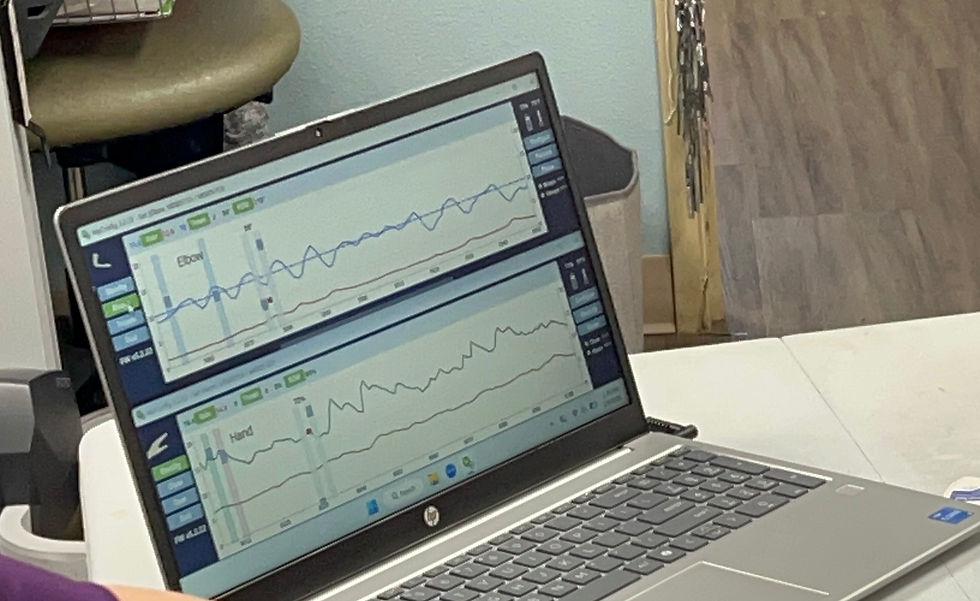
We have a young long-term resident who had a couple CVAs in the past, and he has R sided hemiplegia. He was evaluated and was able to avail this robotic equipment for his R arm. His Medicare covered the cost, and he was able to receive this device with no out-of-pocket cost. Before a therapist can work with this device with a patient, they should be able to read all necessary documentation and get a certification of completion from the MyoPro company. Occupational therapy has been working on this device with him for two months. It takes a while to see results, but it’s amazing how this device can eventually help a patient regain independence with some daily routines. There is a laptop that is connected to this device that gives feedback for the patient and therapist to work on. We also have a mini handheld massager with vibration to help stimulate the muscles during treatments. The resident still has a long way to go, but we can see the potential for long-term success for him with hard work and dedication.
Key Benefits
● Restores functional movement in partially paralyzed arms and hands
● Uses user-initiated control, preserving natural motion
● Supports rehabilitation and daily living activities
● Non-invasive and customizable to individual needs
● Can reduce caregiving demands and improve independence–390.


Comments